
Dulari is an unlettered girl from a small fishing village in Bihar. Being poor meant that even as a child, she had to work: helping in the fields, cooking for others, selling fish. In short, she led a life of drudgery from which there seemed to be no escape.
Until that one magical moment when life suddenly seemed transformed, filing her with hope and giving her something to look forward to. Something that had seemed far away and unattainable in her present situation.
In her words,
"Then one day, when I was passing the village pond, a strange thing happened. As I stood and looked, the scene turned into a picture in my mind. It came alive, bright and lively, telling stories. I was happy the whole day, thinking of my picture."
A little later, as she performed her menial tasks in the house of an artist where she was employed, Dulari saw the light at the end of the tunnel. She decided that, that was what she wanted to do - to draw and paint. Her moment of epiphany at the pond started to get actualized and soon she was on her way to becoming an artist.
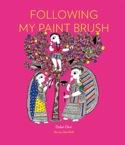
Transcribed by Gita Wolf, this book is the true story of Dulari, in which she talks in simple and lucid terms of her life and her aspirations. All of it beautifully captured, in the brillaintly coloured Madhubani art form. In her painings she seamlessly blends modern images, such as, Raju, the icecream seller, children playing cricket, with the traditional forms and images.
Vividly illustrated, each page is a powerful visual narrative – women working in the fields, selling fish, cooking, cleaning, drawing and painting. If children were to look closely at the images, they would be thrilled to find many interesting details hidden within - birds, fish, nests with fledgelings and more.
This book works at several levels. One, it narrates the typical life of a girl in an Indian village. Secondly, it educates, albeit informally, about the vibrant Madhubabi style of folk art, and most important, it conveys a subtle motivational message of hope to children - Follow your dream!
Comments
Review submitted for LRSI - '14
The book “Following my paint brush” shows that people can have different talents and have different talents and if they get an opportunity they can do well, even if they are not educated like Dulari Devi in this book. Even though she is from a poor fishermen family and has to struggle in her childhood and does not even know about her painting skills, she discovers her passion for painting, thanks to her new employer helps her.
The title originating from this sentence in the book- ‘I found myself wandering around, following my paint brush, tuning what I remembered into pictures’ is interesting and speaks of Dulari Devi’s creative mind. As it says, she is full of ideas to express the beautiful scenes and her thoughts.
The Mithila arts which Dulari Devi draws looks very difficult to draw as it has many designs and lines but thanks to her hard work she could do it very well. She has a lot of concentration and her imagination is wonderful.
Dulari Devi enjoys painting very much and she forgets about her poverty and struggle due to this passion. Her hard work brings her to success as she does not give up. I feel this is very encouraging and the book is thus not only interesting but also
very motivating.
Maisah Syed
3D
Podar International School
Mumbai
Review submitted for LRSI '14
This weekend I read a very interesting book by Gita Wolf “Following my Paintbrush’’... This is a touching story about a poor kid who finally becomes an accomplished artist without any formal education.
Dulari Devi, now a successful artist, came from a very poorfamily. When she was 5 years old, she worked in rice fields to help her family. She helped her mother cook and take care of all her brothers and sisters. Even after working hard, they did not have enough food. To earn money she went to people’s houses to clean.
Even though she was sad, she enjoyed looking at children playing.Looking at them, a picture formed in her mind. It came alive with bright colours. There was an artist inside her, but she did not know it yet.
When she grew up, she continued to work as a cleaner. One of her employers was an artist! She was amazed by all the beautiful art around her. She was so mesmerised that she forgot her own work. When she reached home her hands were itching to make something. So, she took a handful of mud and started to knead. Without knowing, she began to make a bird! The next day, when she went to work, she saw her employer teaching children. She got so excited that she asked her if she could learn too! Once she started she couldn’t stop.
I enjoyed this book because it is was very inspiring. It taught me that if you find your passion, you can achieve success at any age. Gita Wolf has translated Dulari Devi’s words in a very nice simple tone so that children of my age can read and learn from her life. Dulari Devi’s Mithilastyle of folk painting throughout the book are beautiful. The most touching picture is the self portrait of Dulari Devi, viewing herself in the mirror.
When she sees herself in the mirror she says, “I am not just a cleaner woman, I am an artist”.This painting shows she is proud of her achievement and is happy that she does not see a cleaner as her reflection in the mirror.
Teena Bhatia
4A
Podar International School
Mumbai
Review submitted for LRSI '14
I am not much into paintings and drawings. So when my mother bought the book “Following My Paint Brush”, I thought it will be boring. But after reading the book, I found it very interesting. I am going to tell you why.
This is a true story of Dulari Devi, an artist. The story starts when she was a small girl from a poor family. She worked in rice fields, helped her mother at home and would also work in other people’s houses. She could not go to school. But she had a unique talent – to imagine everyday scenes as paintings. Her employer Mahasundari Devi taught her to use paints and brushes. Since Dulari Devi had not gone to school, she found it difficult to hold a pencil or a paintbrush in her hand. But she kept on practising till she got it right. And today she is a famous Madhubani painter.
This is a different book because Dulari Devi tells her story in the form of paintings. Each page has words and a painting. After reading this book, I read another book of same type – Dakiya, the mail man.
“Following My Paint Brush’’ book told me many things – follow your dreams, keep on practising, never give up and always do what you really like to do. I will always try to remember all this. I will read more books on real people.
Arin Moghe
III A
Arya Vidya Mandir School, Bandra West
Mumbai - 50